

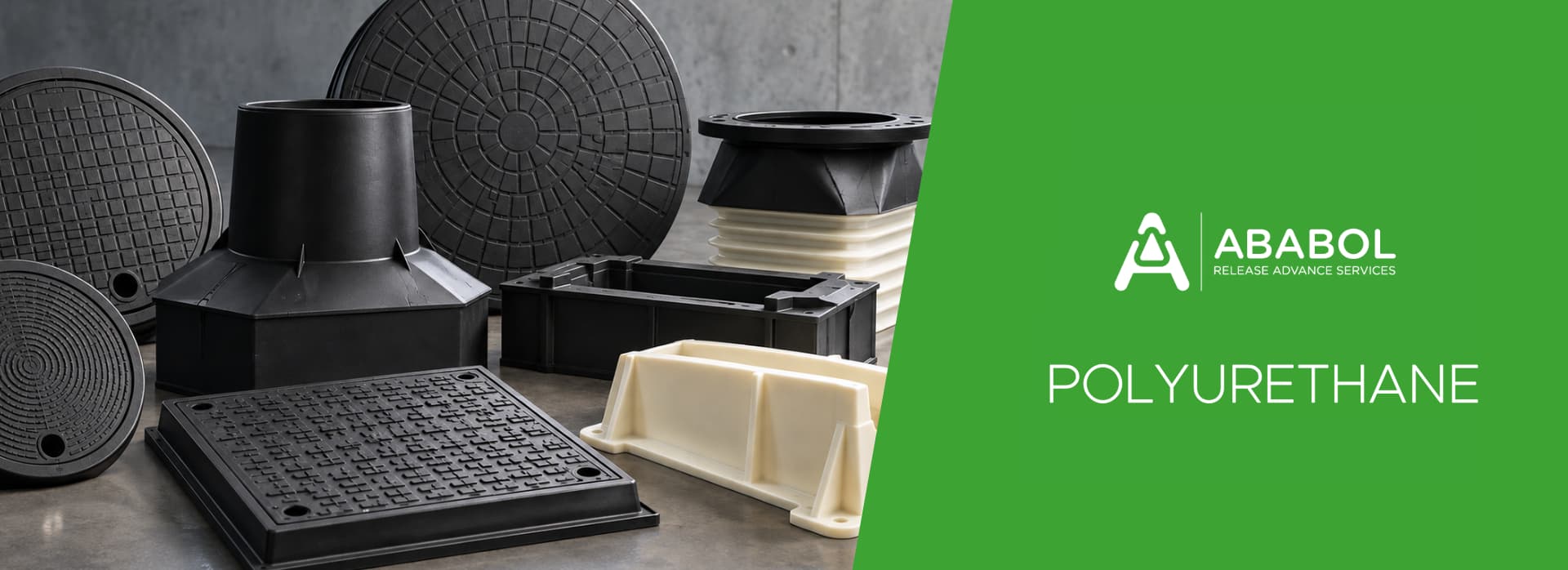
Optimising the demoulding of polyurethane parts.
Demoulding is a key stage in the manufacture of polyurethane parts. In addition to making part removal easier, the system used also affects product consumption, mould cleanliness and the time spent on tasks between production cycles.
When release agent needs to be applied after every part or moulds require frequent cleaning, it is worth reviewing whether the solution being used is still the most suitable for the process.
How to improve the demoulding process.
The choice of release agent should take into account the type of polyurethane, mould geometry and production rate. Drying times and application method are also critical: a product needs to be used under the right conditions in order to deliver the expected results.
Mould preparation is another key aspect. Combining proper sealing with a release agent suited to the material can help increase the number of cycles between applications, reduce residue build-up and make mould cleaning easier.
At Clades Composites, we start by analysing these conditions in order to understand each manufacturer’s specific requirements. A recent case shows how this approach can translate into practical improvements in day-to-day production.
A successful case in polyurethane part manufacturing.
A company specialising in polyurethane processing and manufacturing parts of different sizes for industrial automotive applications, including vehicle components and front panels, contacted Clades Composites to find an alternative solution that could improve the efficiency of its demoulding process.
The company worked with different types of polyurethane and used liquid waxes applied by spray gun, reapplying the product after every demoulding cycle.
This routine resulted in recurring product consumption, additional application time and residue build-up both on the moulds and in the working environment. In addition, the company’s high production rate allowed very little time for the release agent to dry.
A solution adapted to the materials used.
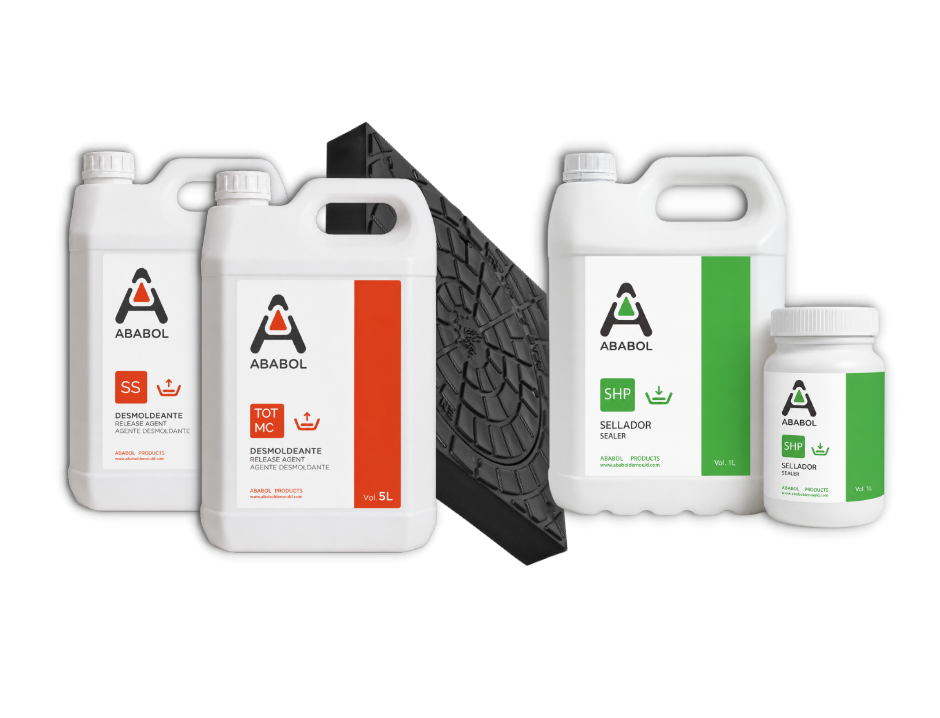
The proposed solution involved preparing the moulds with ABABOL SHP as a sealer and using ABABOL TOT MC as the release agent, applied as a fine spray in small quantities.
For one of the foamed polyurethanes used by the manufacturer, the system needed to be adapted by using ABABOL SS as the release agent, while keeping the same sealer.
This adjustment made it possible to address the specific requirements of the different materials used in production.
From one application per part to several demoulding cycles.
With the system based on ABABOL SHP and ABABOL TOT MC, the manufacturer achieved between 6 and 8 demoulding cycles per application, depending on mould complexity, compared with the previous wax system, which required application after every cycle.
According to the customer’s experience, the change resulted in:
- Lower product consumption.
- More demoulding cycles between applications.
- Less frequent mould cleaning.
- Less dirt and contamination associated with waxes in the production area.
These results relate to this specific case and may vary depending on the material, mould and production conditions.
We analyse your process to find the right solution.
Every manufacturing process has its own requirements. Understanding the materials, working times and demoulding challenges makes it possible to select a solution that is better suited to actual production needs.
Would you like to optimise the demoulding of your polyurethane parts? Contact the Clades Composites team and we will analyse your current application system to identify the most efficient solution for your process.