

ABABOL Solutions for Outdoor Furniture Manufacturing in Rotational Moulding Processes.
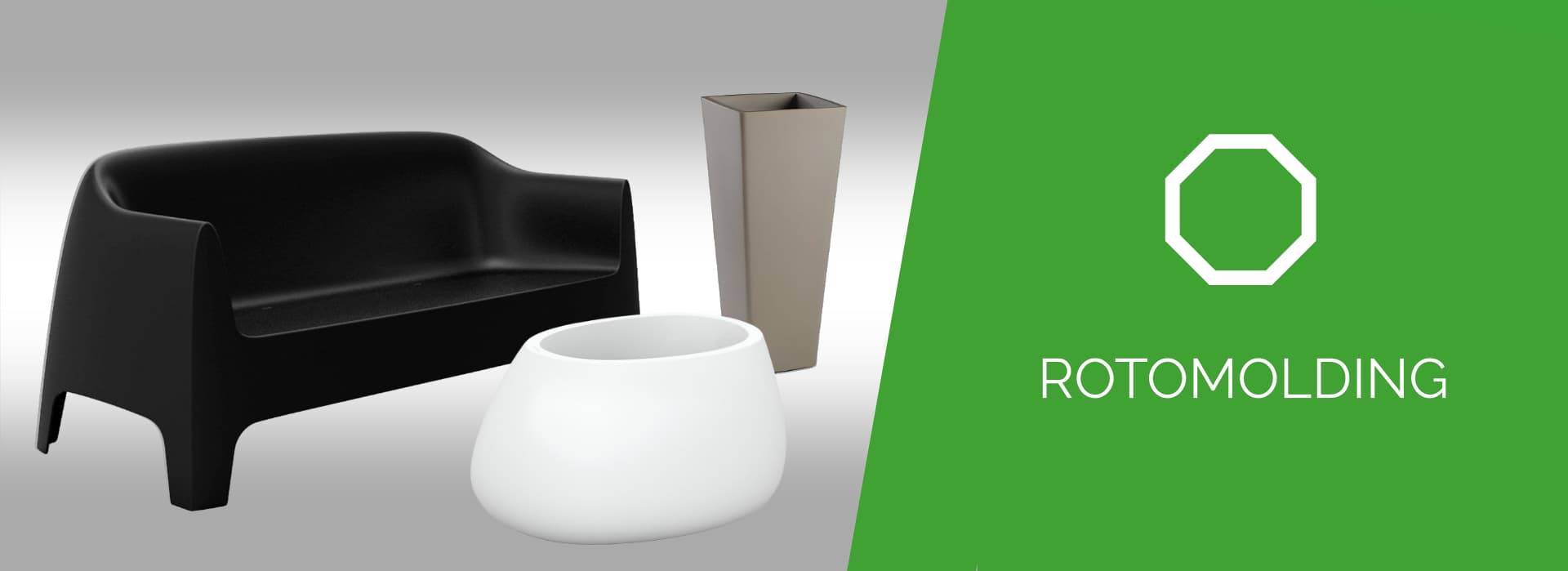
The outdoor furniture market has undergone significant evolution in recent years. Today, a large proportion of designer outdoor furniture, urban furniture, planters, benches, tables, chairs, decorative lighting, and architectural elements are manufactured through rotational moulding processes, primarily using Linear Low-Density Polyethylene (LLDPE), Low-Density Polyethylene (LDPE), Medium-Density Polyethylene (MDPE), and increasingly, recycled plastics and sustainable polyolefins.
These materials stand out for their excellent resistance to impact, UV radiation, moisture, salinity, and temperature fluctuations, enabling the production of lightweight, durable, and low-maintenance components for applications exposed to demanding environmental conditions. The requirements of architects, designers, and manufacturers now extend far beyond aesthetics, encompassing increasingly stringent demands regarding mechanical performance, durability, sustainability, recyclability, and weather resistance.
To meet these requirements, rotational moulding has become one of the most widely used manufacturing technologies for producing high-quality outdoor furniture. This process makes it possible to manufacture large hollow parts with complex geometries while eliminating joints, welds, and assembly points that could become critical during the product’s service life.
Why is Rotational Moulding a Key Technology for Outdoor Furniture?
Rotational moulding, or rotomoulding, consists of introducing a predetermined quantity of polymer powder into a metal mould that rotates simultaneously on two axes while undergoing a controlled heating and cooling cycle.
During this process, the molten material is evenly distributed across the inner walls of the mould, producing seamless one-piece components with uniform wall thickness and excellent mechanical properties.
The main advantages of this technology include:
- Manufacturing of large-sized and complex-shaped parts.
- Minimal internal stresses.
- Excellent impact and deformation resistance.
- High dimensional stability.
- Capability to create organic shapes and innovative designs.
- Reduced post-moulding assembly operations.
- Outstanding resistance to environmental exposure.
Thanks to these advantages, rotational moulding has become a preferred solution for manufacturing:
- Outdoor chairs and armchairs.
- Designer tables.
- Decorative planters.
- Urban furniture.
- Outdoor lighting elements.
- Benches and public space equipment.
- Large decorative structures.
The Importance of Mould Surface Condition.
Although mould design and polyethylene quality are fundamental factors, another element directly influences the final quality of the part: the condition of the mould surface.
Manufacturers seek flawless surface finishes, stable production cycles, and continuous reduction of cosmetic defects. Achieving these objectives requires maintaining moulds in optimal condition through proper cleaning, sealing, and release procedures.
A properly prepared mould surface allows manufacturers to:
- Improve detail reproduction.
- Reduce surface defects.
- Prevent material build-up.
- Facilitate part release.
- Minimise downtime.
- Extend mould service life.
- Maintain consistency between production cycles.
ABABOL Solutions for Mould Preparation, Maintenance, and Release in Rotational Moulding.
Within industrial rotational moulding operations, ABABOL solutions have been developed to help manufacturers optimise mould preparation and maintenance.
The range includes specialised products for every stage of the process:
- Technical Mould Cleaning.
The removal of residues, build-up, and contaminants is the first step in ensuring proper mould performance.
Specialised cleaners help restore the mould surface condition and prepare the tool for the subsequent stages of the production process.
- Sealing and Surface Conditioning
Technical sealers help create a protective barrier on metal surfaces, promoting greater process stability while preserving the original characteristics of the mould for longer periods.
- High-Performance Release Systems
ABABOL release agents are designed to ensure smooth and consistent part release while reducing issues associated with sticking, surface defects, and productivity losses.
Clades Composites offers solutions tailored to different manufacturing conditions, including intensive production cycles, highly complex geometries, and moulds exposed to high levels of abrasion.
- Innovation and Productivity in Outdoor Furniture Manufacturing
The growing demand for designer outdoor furniture requires manufacturers to combine creativity, efficiency, and industrial reliability.
Optimising every stage of the rotational moulding process helps improve surface quality, reduce operating costs, and increase manufacturing productivity.
At Clades Composites, we work alongside manufacturers of outdoor furniture, urban furniture, decorative lighting, and rotomoulded products by providing technical solutions for mould preparation, maintenance, and release through our ABABOL product range.
Our objective is to help customers achieve high-quality surface finishes, improve process repeatability, and maximise productivity in applications where aesthetics, durability, and industrial efficiency are critical success factors.