

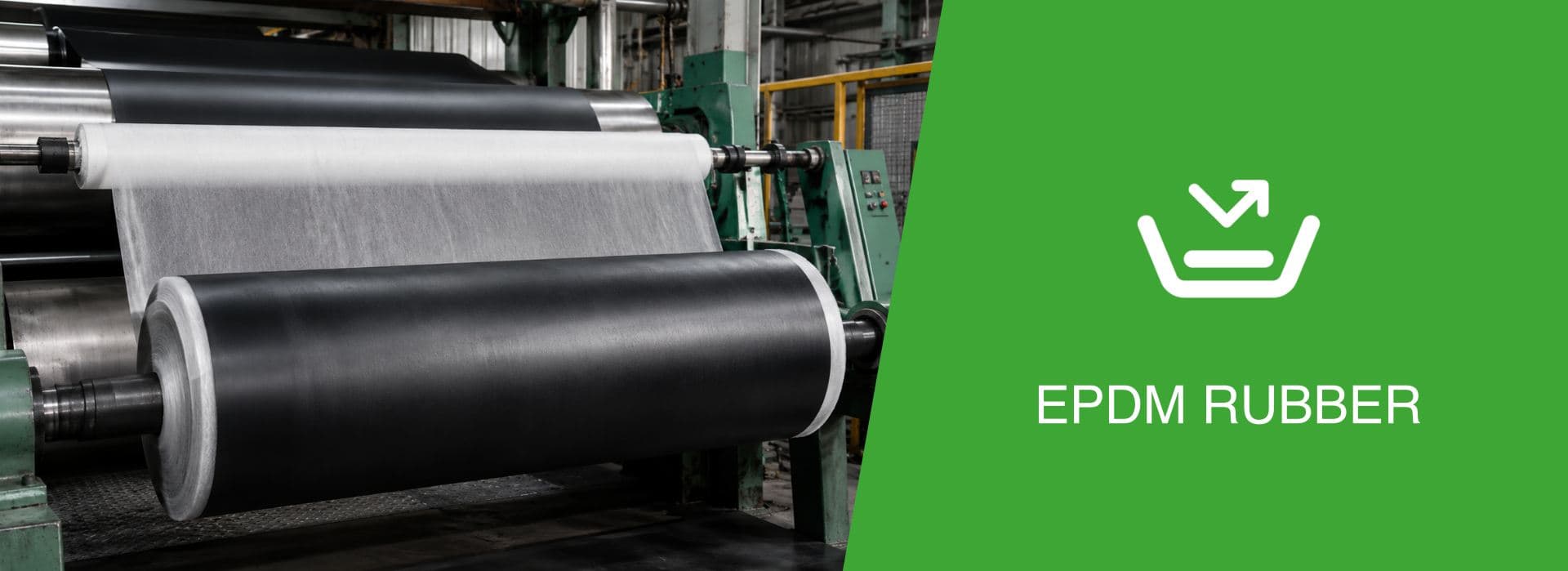
Is the deterioration of your vulcanisation textile preventing clean separation and increasing EPDM production time?
Are marks also starting to appear on the rubber surface?
In certain industrial manufacturing processes for EPDM sheets, strips and rolls, the rubber is processed together with a technical textile that accompanies the material during vulcanisation.
After forming, the assembly is placed in an autoclave and subjected to the temperature and pressure conditions required to complete the vulcanisation process.
Once the cycle is completed, the rubber and textile must be separated again.
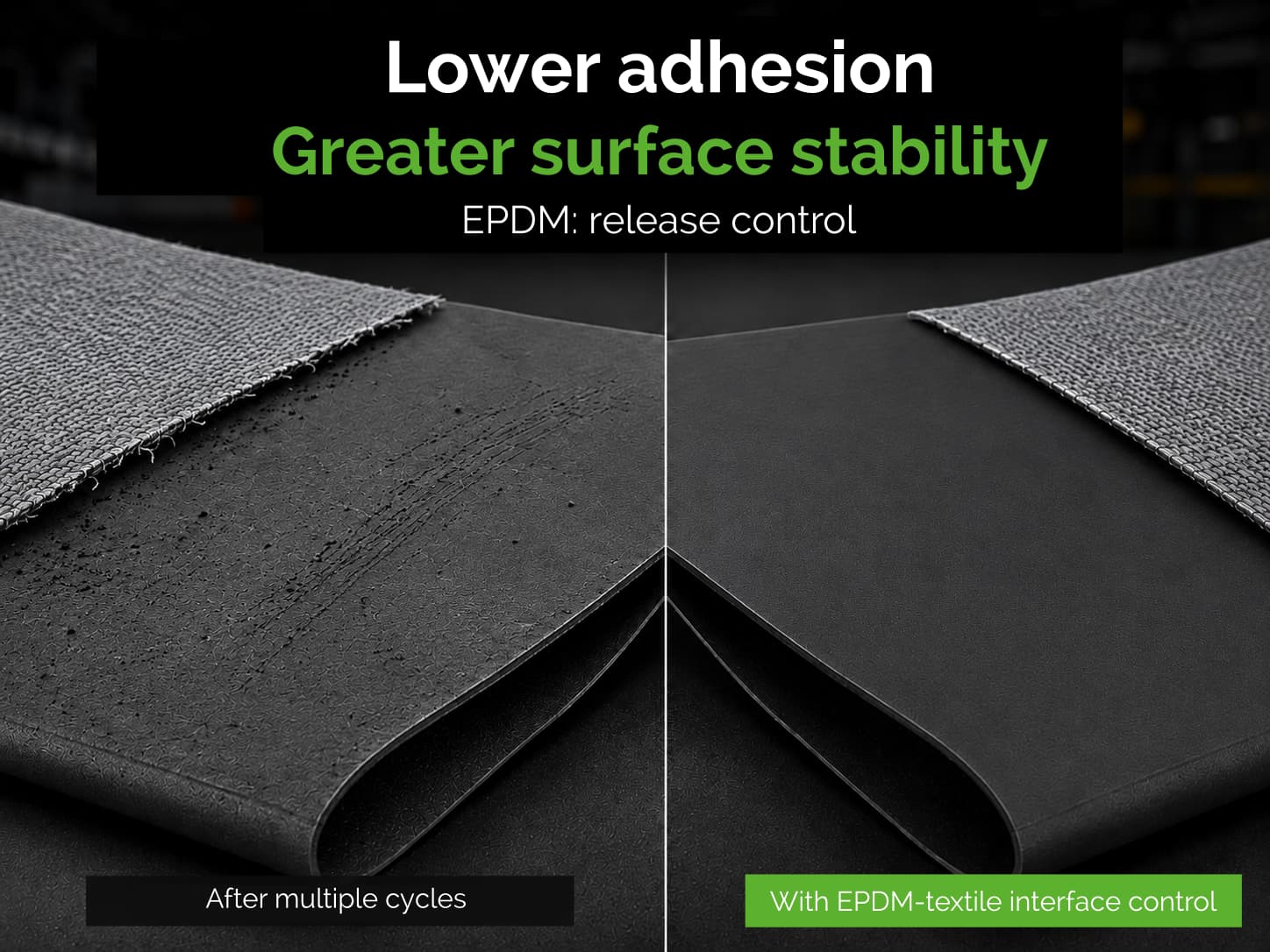
This is precisely where some of the problems that can affect process productivity begin to appear: the rubber remains too strongly adhered to the textile, separation requires increasing effort, release time increases and the textile itself begins to deteriorate.
As this deterioration progresses, the consequences are no longer limited to the textile. Fraying, deformation or adhered residues may eventually be reproduced on the EPDM surface, generating marks on the vulcanised part.
The effectiveness of a release system should therefore not simply be assessed by whether the rubber and textile can eventually be separated.
The key question is:
Can they be separated cleanly, quickly and with minimal effort, while leaving the textile in suitable condition for reuse?
The critical point: the EPDM–textile interface.
During vulcanisation, EPDM remains in direct contact with the technical textile for a prolonged period under temperature and pressure.
As the process progresses, the characteristics of the rubber change and its interaction with the textile surface increases.
When this interface is not properly controlled, the end of the cycle may involve:
- excessive adhesion between rubber and textile
- areas of textile remaining attached to the EPDM
- greater separation effort
- longer release times
- pulling and deformation of fibre
- progressive fraying
- residues adhering to the textile
- difficulties in handling and unwinding
- loss of textile consistency
In repetitive production, these apparently small difficulties are multiplied cycle after cycle.
A release operation that requires more time, intervention or force eventually becomes an important variable in processability and production time.
Separating the rubber without pulling the textile.
This is one of the main functions of ABABOL release systems developed for rubber and EPDM applications.
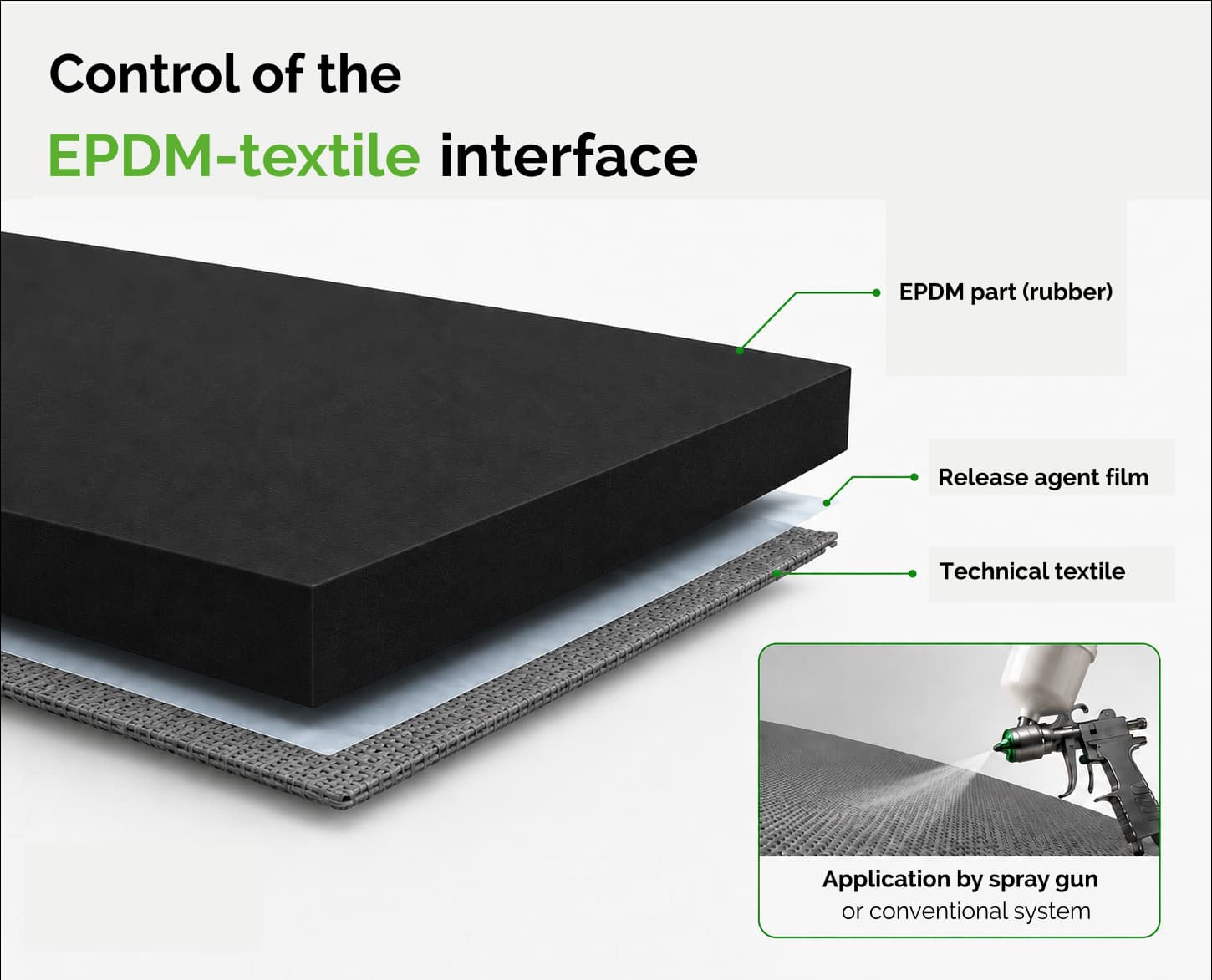
By forming a controlled release film, the treatment acts directly on the EPDM–textile interface, reducing the adhesion generated during vulcanisation.
The objective is very specific:
to allow the rubber to separate cleanly from the textile, without the fabric remaining attached and with minimal separation effort.
When release resistance decreases, the mechanical stress applied to the textile structure is also reduced.
This allows:
- faster separation
- lower release force
- reduced textile pulling by the rubber
- lower fibre deterioration
- reduced fraying
- less adhered residue
- easier subsequent handling
The objective is not simply to ensure that the EPDM “releases”.
It is to ensure that it separates easily without damaging the technical textile that must be reused in the next cycle.
When poor separation starts increasing processing time.
Excessive adhesion does not only have a mechanical consequence.
It also has a production consequence.
When rubber and textile do not separate easily, additional time is required to complete the operation.
Certain areas may require manual intervention, additional force, removal of adhered material or conditioning of the textile before it can be returned to production.
Each of these operations adds time to a process that, under suitable conditions, should be simple and repeatable.
Reducing adhesion therefore also affects a fundamental variable:
the time required between the end of vulcanisation and the textile becoming available for another cycle.
Clean separation with minimal effort facilitates workflow and improves the overall processability of the production line.
Lower separation force means less textile deterioration.
When the textile remains strongly adhered to the rubber, every separation subjects its fibres to additional mechanical stress.
More force has to be applied.
The textile supports greater tension.
And the operation is repeated again and again.
Over successive cycles, this can lead to:
- loss of structure
- deformation
- opening of the fabric
- partially detached fibres
- loss of consistency
- fraying
The release treatment helps reduce precisely this mechanical aggression.
If the rubber separates easily, the textile is subjected to considerably less stress during every release operation.
The benefit is therefore not simply a more convenient release.
It is preventing every separation operation from contributing to the progressive deterioration of the textile.
Are marks starting to appear on the EPDM?
Textile deterioration has another consequence: it can begin to directly affect the surface quality of the finished part.
When a textile loses consistency, begins to fray or accumulates residues, it no longer behaves as a homogeneous surface.
This may lead to:
- raised fibres
- opened or deformed areas
- adhered rubber residues
- differences in contact between different areas of the textile
- surface irregularities
During subsequent cycles, these defects come back into contact with the EPDM.
The result may be impressions, irregularities or marks on the surface of the vulcanised rubber.
At that point, what initially appeared to be a release problem becomes a product-quality problem as well.
Preserving the textile therefore also means preserving the surface consistency of the manufactured parts.
More useful cycles from the same textile.
The textile used during vulcanisation should not be considered merely an auxiliary element.
It is a production tool that should remain operational for as many cycles as possible.
This becomes particularly important when higher-value technical textiles are used, including certain aramid fabrics selected for their mechanical and thermal performance.
Aggressive separation can cause:
- loss of structure
- contamination
- fraying
- loss of surface uniformity
- increased cleaning requirements
- premature replacement
Extending textile life therefore does not simply mean achieving a higher number of cycles.
The objective is to obtain more useful cycles while maintaining clean separation, stable textile structure and consistent EPDM surface quality.
Less residue, better processability.
Clean separation also helps reduce the amount of rubber remaining on the textile after vulcanisation.
This helps the textile maintain more homogeneous conditions over successive cycles and reduces the operations required before it is returned to production.
From a process perspective, correctly controlling the EPDM–textile interface can simultaneously provide:
- lower adhesion
- cleaner separation
- lower release effort
- shorter handling time
- less deterioration and fraying
- lower residue build-up
- reduced cleaning requirements
- lower risk of marks on the EPDM
- easier handling
- improved processability
- more useful reuse cycles
- reduced waste generation
The benefit begins with easier separation but ultimately affects the entire production chain.
Application adapted to each process.
Every manufacturing line operates under different conditions: textile type, grammage, geometry, temperature, pressure, production speed and handling system.
The release treatment must therefore be capable of integrating into the existing process.
ABABOL systems can be applied by spray gun, when tighter control of product quantity and distribution is required, or through conventional application systems.
The objective is to generate a homogeneous film using only the amount necessary to properly control the rubber–textile interface.
Excessive application does not necessarily provide better performance.
Efficiency comes from achieving uniform distribution that allows the rubber to separate easily from the textile without unnecessarily saturating it.
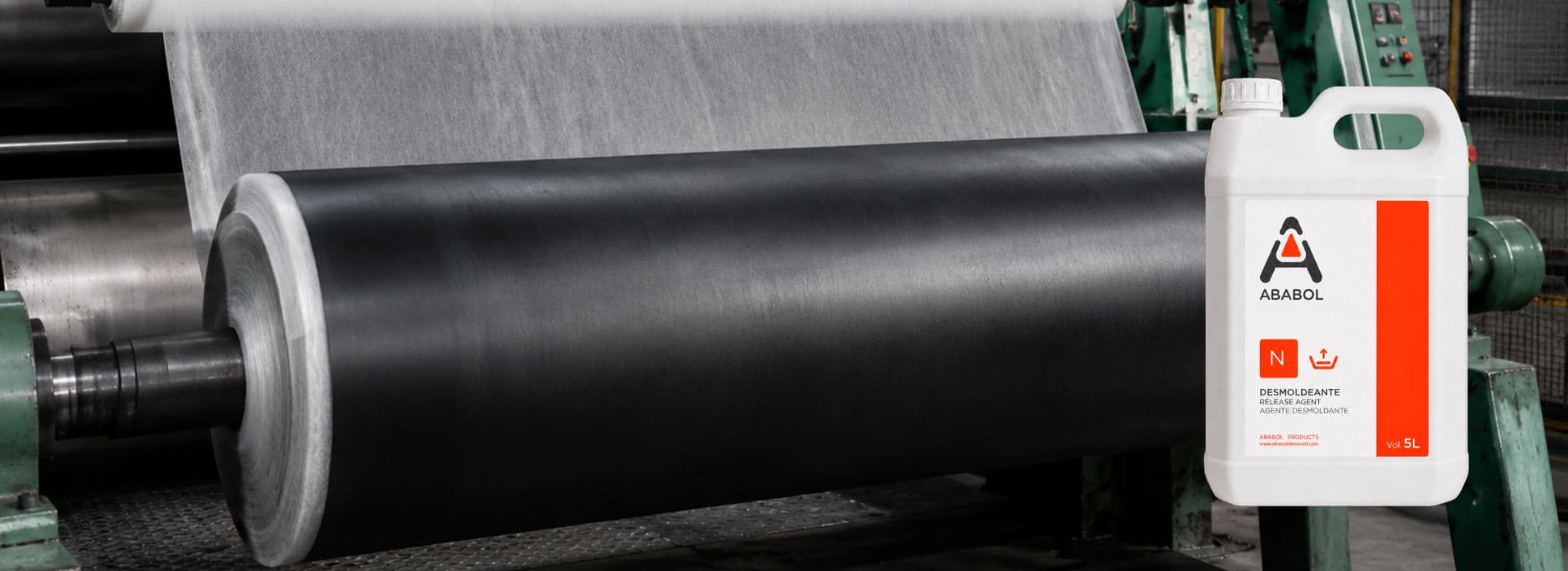
ABABOL also offers different technical treatments adapted to specific industrial requirements, together with the ability to develop or adjust solutions according to the particular conditions of each process.
The real cost goes beyond the release agent.
Comparing two solutions solely by their price per litre provides an incomplete picture.
For EPDM–textile applications, the analysis should also include:
- force required for separation
- time spent on release
- product consumption and application frequency
- required operator interventions
- cleaning frequency
- accumulated residues
- textile deterioration and fraying
- number of reuse cycles
- replacement frequency
- technical textile cost
- possible irregularities or marks on finished parts
If the rubber can be separated with minimal effort, the textile does not remain attached and its structure is preserved for longer, the economic benefit is generated at several points throughout the process.
The relevant variable is therefore not simply the cost of the release treatment.
It also matters how long each separation takes, what the textile costs per EPDM vulcanisation cycle and how many cycles it can maintain acceptable process and quality conditions.
Better separation for better production.
In EPDM vulcanisation processes involving technical textiles, release should be considered a process variable in its own right.
ABABOL systems are developed to reduce rubber–textile adhesion and facilitate clean, controlled separation, preventing the textile from remaining stuck to the EPDM and minimising both the effort and time required for release.
The result is faster and cleaner rubber–textile separation, less textile deterioration and fraying, a lower risk of marks on the EPDM surface, more useful textile reuse cycles and, ultimately, greater manufacturing efficiency and profitability.
Do you have adhesion, textile wear or release issues in your EPDM process?
Our technical team can assess your application and recommend the most suitable ABABOL treatment for your production conditions.