

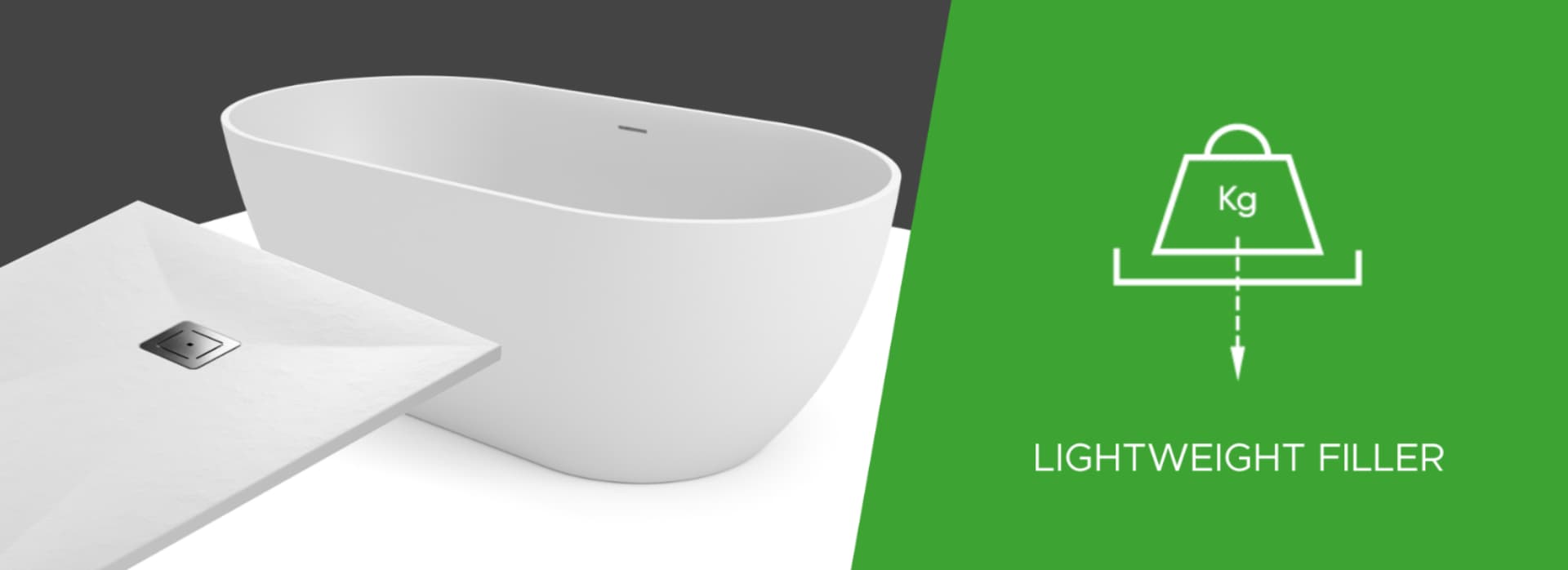
The advantages of low weight in the manufacture of composites.
In today’s industry, the search for innovative and efficient solutions is constant. One of the most prominent approaches in this regard is the use of advanced materials, especially in the manufacture of composite materials. The current trend in the casting materials market is to achieve densities below 1.40 g/ml, reaching materials of 0.9 g/ml, a density lower than that of water.
For this reason, we present the advantages of manufacturing with low weight fillers + polyester resin. These materials not only offer technical advantages, but also contribute to the sustainability and profitability of production processes.
ADVANTAGES OF LOW WEIGHT.
Sustainable and safe materials.
The raw materials used in the manufacture of BP fillers are formulated with 97-100% of materials considered recycled according to the certificate issued by AIDIMME, being free of crystalline silica.
Flexibility in Design.
Lightweight materials allow designers and engineers to create more complex products tailored to the specific needs of consumers. Low weight allows freedom to create parts in terms of size and shape and facilitates anchoring and handling of these.
Versatility in Production.
From a manufacturing point of view, the incorporation of low-weight fillers simplifies processes. These materials adapt to all types of production processes, both continuous where the mixture is produced continuously in a mixing screw, and pre-mixing in batch and feeding with injection equipment or manual casting. The use of low-weight fillers allows productivity to be increased in continuous mixing processes by approximately 20%.
Added value.
The main difference between Clades Composites’ low-weight fillers and other low-weight materials is based on the coating of the fillers. These coatings alter the physicochemical interaction between the fillers and the resin, in a different way than they would behave without the coating. These new interactions in the formulations result in a decrease in the final density of the products compared to similar formulas that do not include treated fillers. The reduction in density is due to changes in the intermolecular interactions between the coated fillers and the thermosetting resins, without compromising their mechanical properties in relation to other products in the sector.
Mechanical Resistance.
The combination of low-weight fillers with polyester resins offers sufficient mechanical characteristics to be used for construction purposes. Materials manufactured with our low-weight fillers also improve thermal and acoustic insulation. This not only increases the durability of the final products, but also minimises the need for maintenance and frequent replacements. As a result, companies can reduce long-term costs and offer higher quality products to their customers.
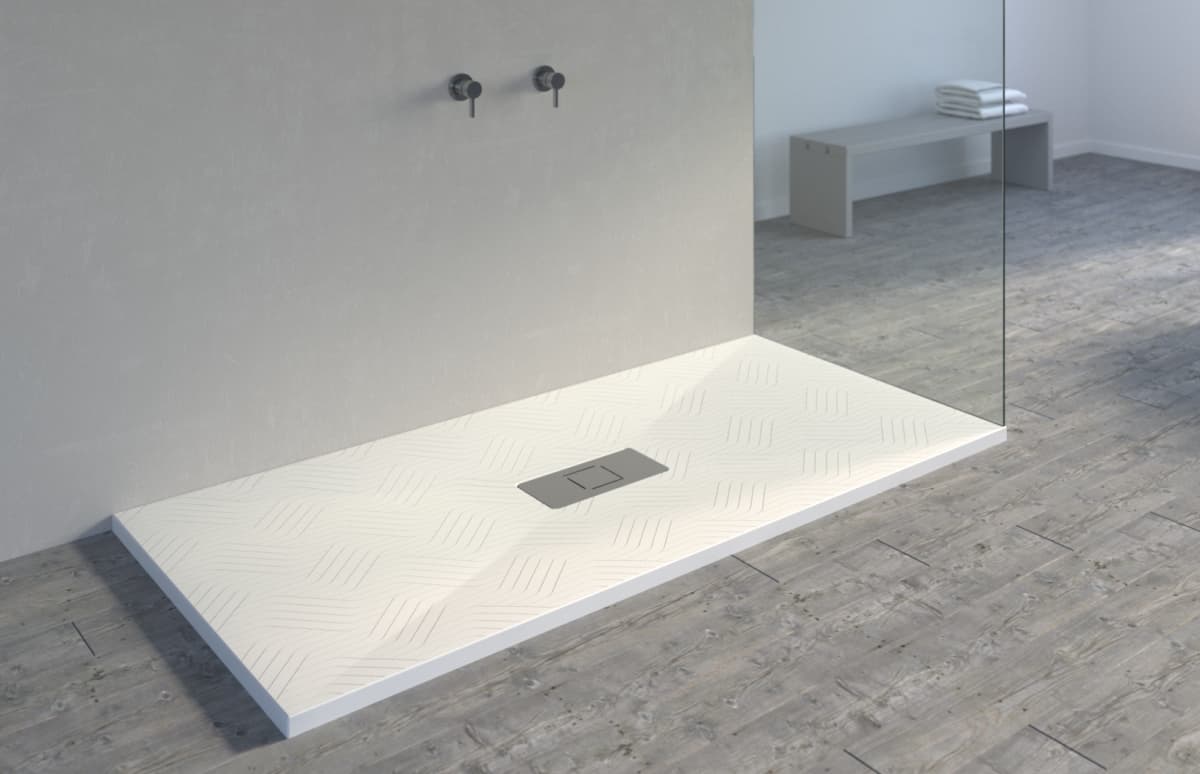
BP materials are used to manufacture all types of products, such as: shower trays, countertops, bathtubs, ventilated facades, balustrades, decorative elements, tiles, etc.
Transport Efficiency.
One of the most immediate benefits of low weight for our customers is the reduction of transport costs. By reducing the weight of the final parts, it allows 30% more parts to be transported in the same shipment (on average). This leads to significant savings in transport, reducing the number of shipments, as well as lower fuel consumption, which translates into a reduced carbon footprint.
Cost reduction.
Manufacturing with low weight versions often generates savings in raw material consumption, which improves the competitiveness of the product. In addition, there is a reduction in transport costs and an increase in productivity, depending on the production system used.

Therefore, using low weight materials in manufacturing offers numerous advantages. From reducing operating costs to improving customer experience. At CLADES COMPOSITES, we are committed to developing and implementing solutions that not only meet market needs, but also contribute to a more efficient and responsible future.