

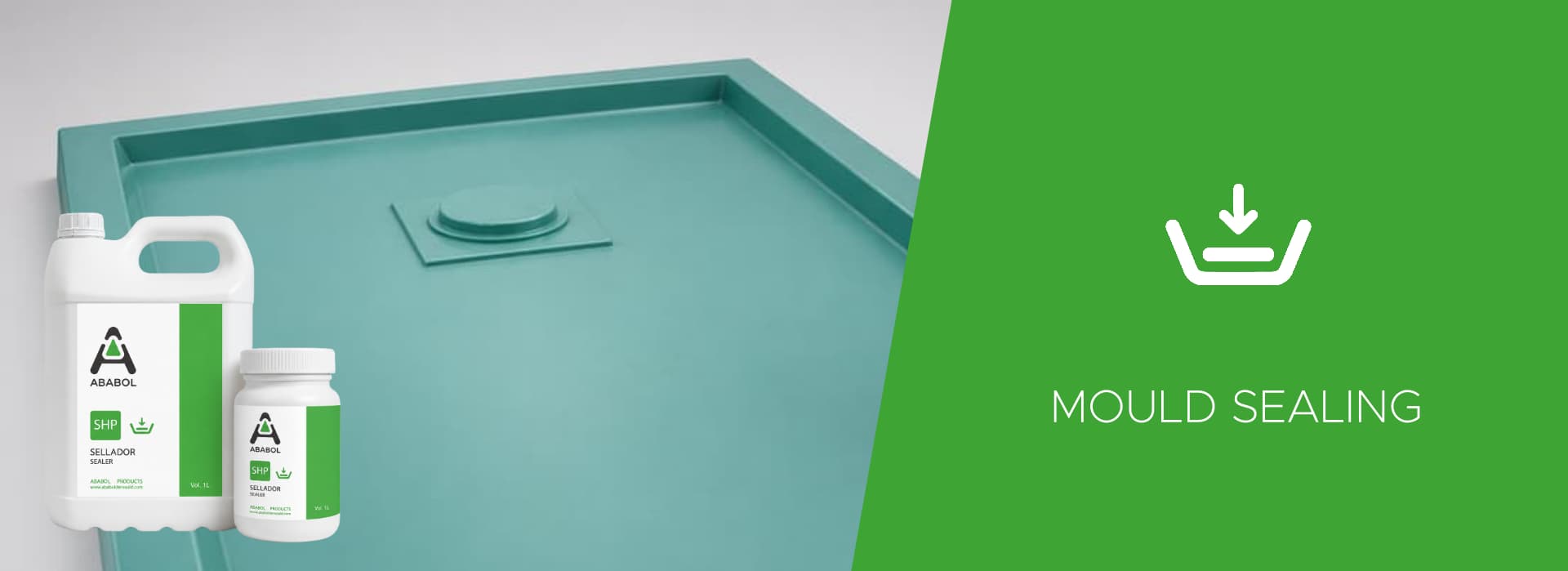
Why should you seal a mould before applying the release agent?
The importance of mould sealing in the manufacture of composites, Solid Surface and polymer concrete.
In many industrial manufacturing processes, when issues such as sticking, surface defects or a gradual reduction in release agent performance arise, the first instinct is often to look for a different release agent. However, in many cases, the root cause is not the release agent itself, but the condition of the mould surface.
Moulds, particularly those manufactured from polyester, epoxy resin or composite materials, develop a surface structure that, over time, can form micropores, microcracks and anchoring points where process residues, contaminants and by-products accumulate.
When this happens, even the highest-performance release agents can become less effective.
For this reason, mould sealing has become a standard practice in industries such as composites manufacturing, Solid Surface, sanitary ware, marine, swimming pools and polymer concrete, among many others.
What is the function of a mould sealer?
A mould sealer works by creating a protective barrier over the mould surface.
Its main functions are to:
- Seal micropores and surface irregularities
- Reduce physical and chemical anchoring points
- Protect the mould surface against contaminants
- Improve the performance of mould release systems
- Simplify mould maintenance
- Extend mould service life
The result is a more homogeneous and stable surface that enhances process repeatability and consistent part quality.
Common issues when a mould is not properly sealed.
The absence of an effective mould sealing system can lead to several operational problems:
- Progressive loss of release performance.
As production cycles increase, residues can accumulate within the mould’s micropores, reducing the effectiveness of the release agent.
- Increased surface defects.
Surface marks, hazing, dull areas and finishing defects may appear as the mould surface gradually loses its uniformity.
- Higher release agent consumption.
When the mould surface becomes degraded, it is often necessary to increase the frequency of release agent application to maintain production performance.
- Increased maintenance operations.
Without adequate surface protection, deep mould cleaning and refurbishment can become frequent maintenance tasks.
When should a mould sealer be applied?
The use of a mould sealer is particularly recommended for:
- New moulds.
It conditions and protects the mould surface before production begins.
- Repaired or polished moulds.
Following repair or polishing, the mould surface is exposed and requires protection.
- High-volume production.
In applications where moulds operate continuously over long production runs, a mould sealer helps maintain process stability and consistent performance.
- High cosmetic-quality applications.
Solid Surface, sanitary ware, shower trays, countertops, marine and swimming pool components require flawless surface finishes, making mould sealing particularly beneficial.
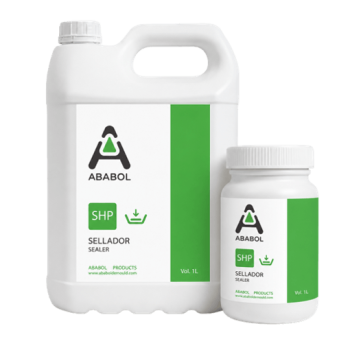
ABABOL SHP: Sealing and protection for industrial moulds.
ABABOL SHP has been developed to act as the first protective barrier for industrial moulds, sealing micropores and reducing the anchoring points that can affect release performance. Its formulation is suitable for metal, polyester and epoxy moulds and is fully compatible with both water-based and solvent-based release systems.
Its main advantages include:
- Excellent adhesion to the substrate.
- No transfer to the finished part.
- Easy application.
- Excellent thermal stability.
- Compatibility with a wide range of industrial manufacturing processes.
- Improved performance of mould release systems.
A small step that can make a big difference.
The efficiency of a mould release process does not depend solely on the release agent used. Proper preparation and protection of the mould surface are essential for achieving stable production, reducing manufacturing issues and maximising mould service life.
For this reason, an increasing number of manufacturers now include mould sealing as a standard step within their preventive maintenance programmes and process optimisation strategies.